

Foundational Health Pillar #2
Improve Fitness With Motion and Exercise
Fitness involves so much more than just building large muscles or running far distances. Daily motion and exercise is an essential pillar of living a healthy life—both physically and mentally. In fact, it is one of the key drivers for longevity. But with so many different fitness programs out there, it can be hard to know where to start. We break fitness and exercise down to its basics to help you make motion a daily habit for life.


Building a Healthy Foundation of Motion
Motion is a critical component of a healthy life. Motion IS life. But it doesn’t need to be complicated—you don’t need an expensive workout program or gym membership. Starting with the basics of getting daily steps in, stretching, and implementing simple resistance training exercises can go a long way toward improving your health.
Key Foundational Health Motion Principles
Implement Daily Walking: Aim for 10,000 steps per day. It’s okay if you don’t reach it, but set a goal and work regular walks into your daily routine to progress towards that goal!
Commit to Daily Stretching: Incorporate a dynamic stretching routing in to your morning and a static stretching routine into your evening. Keep your body agile, so you don’t become fragile as you age.
Build & Maintain Muscle With Resistance Training: Aim for 2-3 resistance training workouts per week, focusing on making each rep count rather than just counting your reps and going through the motions. Use whatever is available to you—bodyweight, bands, machines, or free weights—and make sure to target each major muscle group.
Work in Weekly Cardio Exercise: Aim for 2-3 ~20 minute cardiovascular exercises per week. One moderate cardio day (zones 2-3), one high intensity cardio day (zones 3-4), and one interval training day where you reach zone 5 and allow your heart rate to come back down in repeated intervals over the 20 minutes.
Focus on Long Term Goals: Overall health is a long game, not a short game, and motion is no different. Focusing on long term results will give you a better quality of life for years to come.
Get Started With Motion
Resources to Help You Make Motion an Everyday Healthy Hobby!

Learn
Check out our podcast to learn more about the importance of motion and how you can implement fitness into your everyday life!

Take Action
Ready to get started on your fitness journey? Find an exercise plan tailored to your health goals in our health guides and protocols.

Shop
Find exclusive deals on fitness brands and products that we trust in the motion section of our One Stop Health Shop!

Lab Testing & Interpretation
Understanding your level of fitness goes deeper than simply knowing how far you can run or how much weight you can lift. Your body contains a wealth of biomarker data that indicate your level of fitness that only testing can reveal! This is why we offer lab testing and interpretation services to help you get access to this fitness information and inform your exercise decisions!
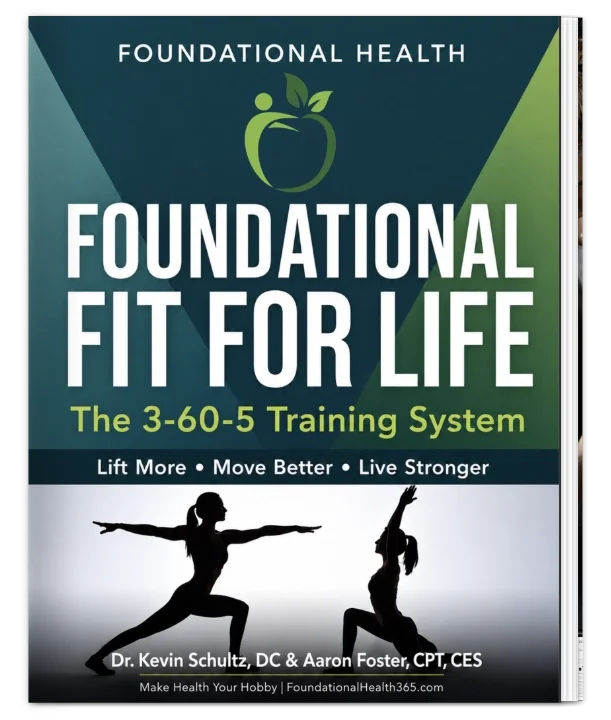
Download Our 3-60-5 Fit For Life Training Program
Our simple, sustainable fitness system designed to help you build strength, boost energy, improve mobility, and feel better in your body — without spending hours in the gym.
Motion Podcast Episodes



The Most Recent Motion-Focused Episodes of the Foundational Health Podcast
Not Finding What You’re Looking For?
Search for the topic you’re looking for or browse our full catalogue of Foundational Health podcast episodes!
Motion FAQs
Have questions about how you can improve your fitness and health with exercise and motion? Check out our Motion frequently asked questions:
-
Daily stretches
Daily walks (aim for 10,000 steps)
Cardiovascular exercise 2-3 days per week
Resistance training exercise 2-3 days per week
-
Cardiovascular exercise is an important component towards a healthy foundation for motion, but it’s just one piece of the puzzle. It’s important to work in regular resistance training exercises to build and maintain healthy muscles and bones—contributing to enhanced vitality and longevity.
-
Not all resistance training contributes to increased muscle size. Focusing on strength-building rep ranges (~3-6 reps) and higher weights will increase muscle strength without as much of a hypertrophic effect (muscle size building).
Building large, bulky muscles can be much more difficult than you think, and implementing resistance training 2-3 times per week won’t make a significant change to your muscles sizes—but it can make an incredible impact on your overall health!
-
Proper nutrition and recovery are essential for supporting a regular exercise routine. Nutrition helps give you the energy you need to exercise, and the nutrients you need to build and maintain muscle. Proper recovery—especially with good sleep—gives your body the time it needs to heal and strengthen after exercise.
-
Check out the motion episode of the Foundational Health podcast!
Pillar #2: Giving Your Body the Motion it Needs & Craves | Foundational Health
-
All-in-all it’s important to make reps count rather than just counting reps. Focus on controlled, deliberate movements to maximize muscle engagement and avoid injury risk.
For strength: train in the 1-5 rep range
For muscle growth (hypertrophy): train in the 10-15 rep range
For both: train in the 5-9 rep range
-
Stretching: Daily stretching is essential. Incorporate dynamic stretches in the morning and static stretches in the evening.
Walking: Aim to walk daily, ideally in multiple 15-minute increments throughout the day to stimulate your body at different times as the day progresses.
Cardio: Include cardio three times a week.
One moderate cardio day (zones 2-3) for around 20 minutes
One high intensity cardio day (around zones 3-4) for about 20 minutes
One interval training day (reaching zone 5) for about 20 minutes, off and on, allowing your heart rate to reach zone 5 and drop back down in intervals that work for your fitness level
Resistance Training: Engage in resistance training three times a week. A balanced routine might include a push-pull-legs split, which targets different muscle groups on different days.
Learn why menopause can trigger joint and tendon pain, common symptoms, the role of estrogen and HRT, and how strength, nutrition and sleep support recovery.