Cancer Prevention and the Daily Habits That Support Your Health
Listen on your favorite podcast platform:
Spotify | Apple Podcasts | YouTube | IHeartRadio | Amazon Music
By Dr. Kevin Schultz
Cancer is one of the most feared words in the English language. For too many people, it feels like the end of the story.
But there is room for hope—and practical things you can do to support your health every day.
The food you eat, the way you move, your hydration, your sleep, and the intention behind your choices all influence how your body functions and recovers. If you are living with cancer, those foundations still deserve your attention.
Over my 26 years as a chiropractor trained and certified in nutrition, I have worked with many people undergoing cancer treatment. When they begin improving their nutrition, movement, recovery, and mindset, some tell me they feel better than they have in years.
I am not promising a cure. I am saying that quality of life matters, and lifestyle gives us meaningful things to work on.
Educational disclaimer: This article provides education from a natural health perspective and is not medical advice, a diagnosis, or a treatment plan. Work with your oncologist and qualified healthcare team before major dietary changes, fasting, or supplementation. These lifestyle approaches are intended as supportive health practices; individual results vary.
Understanding Cancer Through a Metabolic Perspective
One way I look at cancer is through the environment inside the body, sometimes called the internal terrain. Cells can acquire mutations before someone receives a cancer diagnosis, which is one reason I care about supporting that environment proactively.
From a natural health perspective, I focus on metabolism: how cells use energy, how the body handles blood sugar, and the roles of chronic inflammation and tissue oxygenation.
Many cancer cells use substantial amounts of glucose, or sugar, and glutamine, an amino acid. This helps explain the interest in metabolic approaches that explore changes in fuel availability and cellular signaling.
The Warburg Effect and PET Scans
The Warburg effect describes how many cancer cells take up large amounts of glucose and convert much of it into lactate, even when oxygen is available. This pattern supports the demands of rapidly growing cells.
We can see this effect in action with PET scans. These scans rely on a common tracer called FDG that allows areas of the body with increased glucose uptake to become visible in the scan. Not every cancer behaves this way, and inflammation and infections can also light up, but this is an important example of how we’ve used this knowledge in modern medicine.
For me, this reinforces the importance of paying attention to metabolic health . It is the framework behind my interest in whole-food nutrition, stable blood sugar, and individualized approaches to keto and fasting.
The Ketogenic Diet and Cancer
The core principle of a ketogenic diet is to lower carbohydrate intake and change glucose availability, insulin signaling, and the body’s use of fat and ketones in its metabolism.
With many cancer cells seeing this Warburg Effect of relying on large amounts of glucose, it’s clear to see why there is a number of research studies on this diet’s affect on cancer development. The theory is that it has the potential to starve cancer cells of the glucose they require for rapid growth.
Now, my claim is not that the ketogenic diet is best for every cancer patient, or that the ketogenic diet will cure your cancer. Far from it. But it could be a potential lifestyle change to explore—with help from your oncologist team—if you’re facing a diagnosis.
An important thing to note—when I discuss a ketogenic diet, food quality matters. A diet built around avocado, nuts, seeds, eggs, fish, and appropriate vegetables looks very different from one built around hot dogs and packaged “keto” products. It also doesn’t have to be a diet you stick with for life. I’ve often discussed an occasional, 30-day period of whole-food keto alternated with a regular, whole-food diet to periodically disrupt the expected energy pathways of cancer cells.
As always, if you have cancer, your cancer type, weight, strength, and treatment need to guide the diet discussion with your care team.
Fasting and Autophagy
Fasting, like the ketogenic diet, is another way to change the metabolic environment within the body. As insulin and liver glycogen availability shift, the theory is that cancer cells may starve out and struggle to grow. Early clinical research indicates this practice could help slow cancer growth and improve effectiveness of traditional treatments in some patients.
Another area of interest is autophagy, the cellular recycling process that breaks down and reuses damaged or unnecessary components. An overnight fast and a multiday fast create different metabolic conditions that jumpstart this autophagy process which can be beneficial in fighting cancer cell growth.
My personal routine has included intermittent fasting and occasional longer fasts—but that is personal context, not a schedule for someone with cancer to copy.
Before fasting during treatment (or before), especially a prolonged water fast, work with your oncology team and an appropriately experienced clinician. Maintaining weight, muscle, hydration, and adequate nutrition must be part of that decision.

Nutrition and Cancer: Start With Real Food
My simplest advice is to eat a wide variety of real food. I call it “God food”: foods that come from nature, with the nutrients, fiber, and variety they were created to provide.
You do not have to eat perfectly. I certainly do not. Start improving the foods that make up most of your diet.
Reduce Refined Sugar and Ultra-Processed Foods
Begin with limiting and removing sugary drinks, candy, desserts, and heavily processed snacks. Also pay attention to refined carbohydrates, such as many breads, cereals, chips, and pastas. Their starches break down into glucose even when they do not taste sweet.
Look beyond a single number on the label. Consider the ingredients, fiber, portion, and the rest of the meal. I prefer whole fruit over juice for its fiber, and I pay attention to the oils used in packaged foods.
Build meals around protein, colorful plants, and healthy fats. Some of my favorites are grass-fed meats, pasture-raised eggs, wild-caught salmon, leafy greens, berries, avocados, olive oil, nuts, and seeds.
Support More Stable Blood Sugar
Include protein at each meal, eat it first when practical, and pair it with fiber and healthy fats.
I also try to finish eating about three hours before bed. That became a bigger priority after I spent 60 days comparing glucose-monitor readings with my Oura Ring data. Even with a healthy diet, I found opportunities to improve.
Another simple habit is a 10- to 15-minute walk after eating, especially after dinner, to support your metabolism. Find something you will actually do consistently.

Fiber, Gut Health, and Protective Plant Compounds
Variety matters because different gut microbes use different food components. Gut health is closely connected with immune function, which is why I give it so much attention.
I often discuss working toward 30–45 grams of fiber daily, spread across meals, as digestion and individual care needs allow. Fruits, vegetables, beans, nuts, and seeds are great places to start.
Walnuts, Berries, and Urolithin A
Walnuts contain ellagitannins, which can yield ellagic acid. Certain gut bacteria can then convert related compounds into urolithins, including urolithin A.
Urolithin A has attracted interest for its role in clearing worn-out mitochondria, the energy-producing structures inside cells. Researchers are studying its relevance to muscle health, aging, and cancer-related processes.
Pomegranates, raspberries, strawberries, blackberries, and pecans also belong in this conversation. These are everyday foods you can easily rotate into meals and snacks.
Cruciferous Vegetables, Sulforaphane, and I3C
Broccoli, broccoli sprouts, cauliflower, cabbage, kale, and Brussels sprouts provide precursors to compounds such as sulforaphane and indole-3-carbinol, or I3C.
Sulforaphane is studied for its effects on cellular defense pathways, antioxidant and detoxification enzymes, cell division, and epigenetic regulation. I3C can form DIM during digestion, and these compounds are studied for their effects on estrogen metabolism and cell growth.
Another process involved is apoptosis, or programmed cell death. Some cancer-related findings involving these compounds come from laboratory and animal research.
You do not need to memorize the terminology. Give these vegetables a regular place on your plate.
I also like turmeric, ginger, garlic, onions, green tea, mushrooms, flaxseed, bone broth, and fermented foods such as kimchi and sauerkraut. I prefer grinding flaxseed fresh and choosing glass containers when practical.
Vitamin D, Testing, and Foundational Supplements
Vitamin D deserves attention because of its roles in immune function and cell regulation. Sun exposure, diet, time indoors, and individual health factors can affect your status.
My preference is to test instead of guess. My family has pursued higher blood levels than conventional targets, but the right level and dose for you should be established with your clinician.
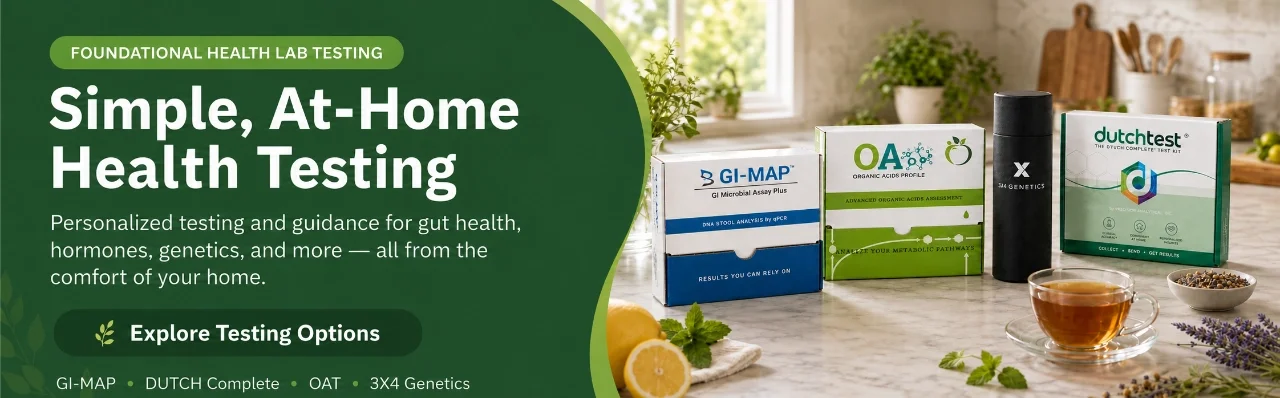
Depending on your needs, useful testing discussions may include vitamin D, a metabolic panel, inflammatory markers, and gut testing when digestive concerns warrant it.
The “Foundational Four” supplements I commonly discuss are a multivitamin, omega-3s, vitamin D3 with K2, and a spore-based probiotic. Testing and individual needs guide what comes next. During cancer treatment, review supplements for suitability and possible interactions with your care team.
Support from the Other Pillars of Foundational Health
Motion and Hydration: Make the Basics Consistent
Daily movement supports circulation, lymphatic flow, muscle function, and mood. Preserving muscle can be especially important during cancer treatment.
Make appropriate movement a priority. That might mean a short walk, strength training, or gentle mobility work, depending on your situation. Our free Fit for Life training system provides a structure for strength, balance, agility, and mobility.
Hydration is another simple habit worth making consistent. I prefer clean, filtered water and use about half your ideal body weight in ounces daily as a general starting point, adjusted for individual needs and any medical fluid restrictions.
Sip throughout the day. Electrolytes such as sodium, potassium, and magnesium support fluid balance, but you can obtain them from food as well as drinks. Your activity, fluid losses, and health determine what you need.
Recovery: Prioritize Sleep, Calm, and Community
Aim for seven to nine hours of quality sleep, with a cool, dark room and consistent sleep and wake times. Turn down bright lights, put away screens, and create an evening rhythm of calm, prayer, or gratitude.
Getting outdoors for natural morning light can help support your sleep-wake rhythm. That means ordinary outdoor light exposure, not looking directly at the sun.
Recovery also includes your emotional and spiritual load. Forgiveness, prayer, Scripture, and community are meaningful parts of that for me. Surround yourself with people who care about you, and let them help.
Spend time in nature and practice gentle breathing, such as the physiological sigh. Sauna is another practice I enjoy when appropriate for a person's health and hydration.
Pay attention to how you speak to yourself. Give yourself language that supports hope and the next constructive step.
Intention: Find Your Big Why
Intention is the fifth pillar of Foundational Health, and it helps the other four stick.
Why do you want to take better care of yourself? More time with family? Energy to serve others? Better stewardship of the body God gave you?
Proverbs 29:18 reminds us of the importance of vision. A meaningful “big why” gives you something to return to when motivation is low.
Write it down. Make it personal. Let it guide your daily choices.
Flipping the Script on Cancer
All in all, my goal is to help you approach cancer—and any disease for that matter—with hope rather than hopelessness. To help you understand that you have control over your health through the lifestyle decisions you make, which can have a powerful impact on your chances of developing disease, or fighting disease after diagnosis.
Because your health is not solely determined by dumb luck or genetics. You are in control.
And I hope this article gives you the hope and the direction to take that control in your life.
Resources
Dr. Gez Agolli Progressive Medical Center | Integrative & Functional Medicine in Atlanta
Dr. Jonathan Stegall Integrative Oncology - Dr Jonathan Stegall
Top Foods and Practices to Conquer Cancer | Jordan Rubin — Jordan Rubin
Holistic Health Programs, Protocols, and Guides | Foundational Health
Cancer Dies When You Do THIS: https://www.youtube.com/watch?v=f9PL6o4OLNw
5 Diet Strategies for Cancer Care (official guide): https://www.drberg.com/guides-resources/diet-strategies-for-cancer-care
Cancer prevention tips overview (including vitamin D targets): https://www.facebook.com/reel/1853193821985673/
How My Mom Reversed Cancer Naturally (After Chemo Failed) – full episode with root causes, diets, foods, herbs, and stories (includes Jordan Rubin references): https://www.youtube.com/watch?v=IlkUA6HMc80
I Was Given 90 Days to Live… How Jordan Rubin Survived (joint episode): https://www.youtube.com/watch?v=vEHa-5JzCgs
How I Healed Metastatic Cancer Without Conventional Treatment (his own full podcast episode + protocol): https://www.jordanrubin.com/podcast/library/episode-1
What I Wish More People Knew About Battling Cancer (and Preventing It): https://www.jordanrubin.com/newsletter/what-i-wish-more-people-knew-about-battling-cancer-and-preventing-it
Top Foods and Practices to Conquer Cancer: https://www.jordanrubin.com/newsletter/my-top-foods-and-practices-to-conquer-cancer
Jordan Rubin guest episode on the podcast: Search “Uncovering The Bible’s Secrets for Healing & Nutrition | Jordan Rubin” on https://foundationalhealth365.com/podcast
Walnut consumption curbs inflammation and colon cancer risk | EurekAlert!
Educational disclaimer: This article provides education from a natural health perspective and is not medical advice, a diagnosis, or a treatment plan. Work with your oncologist and qualified healthcare team before major dietary changes, fasting, or supplementation. These lifestyle approaches are intended as supportive health practices; individual results vary.